Gold-plated stainless steel jewelry, explained honestly

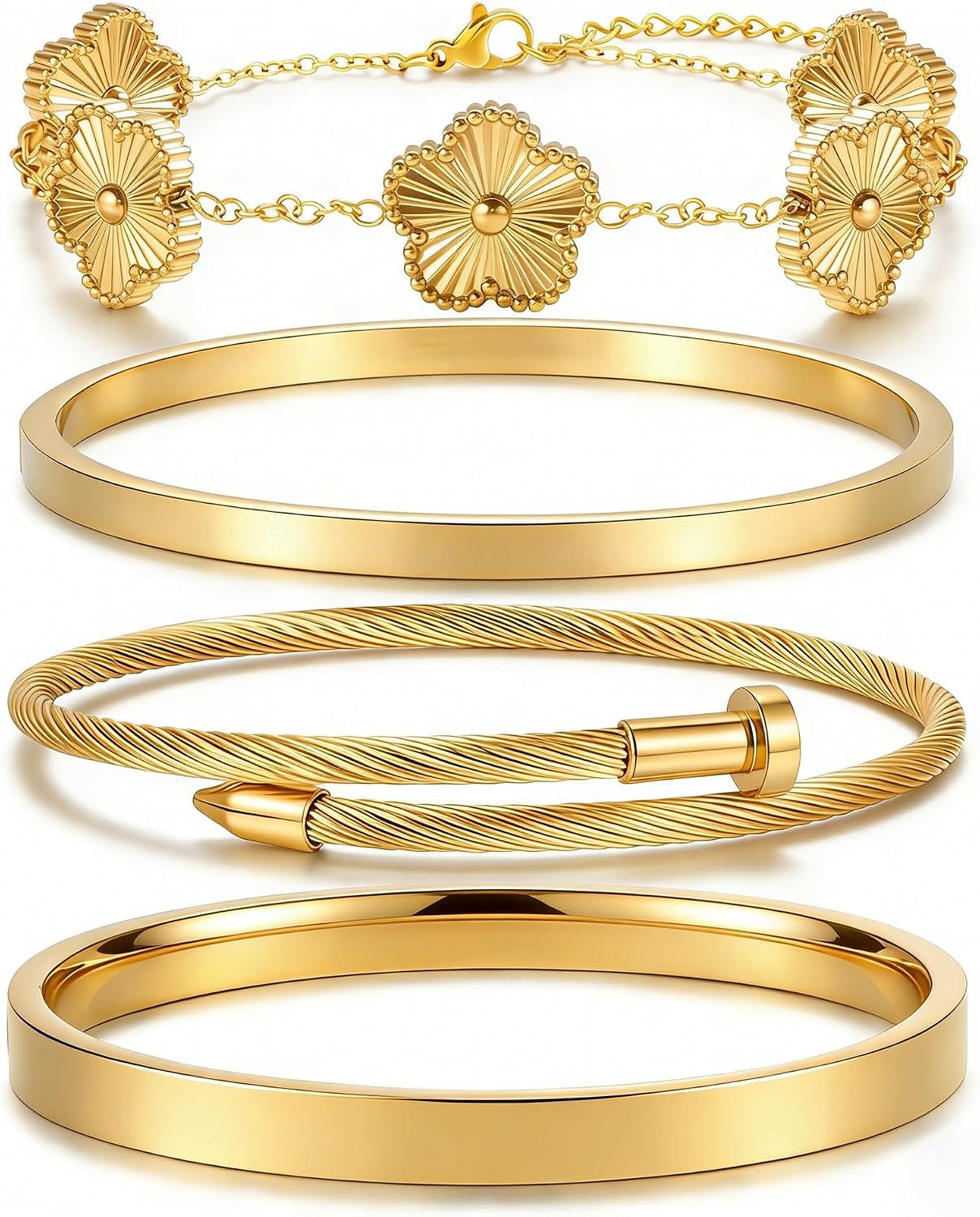
Almost every piece of jewelry in this shop is described as 14K or 18K gold plated over stainless steel. That phrase does real work, and it is worth unpacking, because the same words get used for products that behave very differently on the wrist.
What the karat number refers to
On a plated piece the karat number describes the gold in the plating layer, not the piece as a whole. An 18K plated bangle has a microscopically thin layer of 18 karat gold bonded to a base metal underneath. The karat tells you the colour and purity of that surface, and nothing about its thickness.
This is the single most misread specification in jewelry. A higher karat number on a plated item means a warmer, deeper yellow, not a more substantial piece. Thickness is a separate figure and it is rarely published at this price point.
Why the base metal matters more
Underneath the plating, stainless steel behaves completely differently from brass or zinc alloy. Steel does not corrode, does not turn skin green, and does not react with sweat or perfume. When the plating eventually wears at a contact point, what shows through is a neutral silver-grey rather than a discoloured patch.
That is the real reason to prefer plated steel over plated brass at similar prices. The failure mode is far more graceful, and the piece stays wearable well past the point where a brass-based equivalent becomes unpleasant.
How long the plating lasts
It depends almost entirely on friction rather than time. A pendant that hangs still can keep its finish for years. A stacking bangle that rubs against two other bangles all day will show wear at the contact points much sooner, and a ring worn on a working hand sooner still.
We do not publish a number of years, because any number would be invented. What we can say is where the wear appears first: edges, clasps, and anywhere two pieces touch each other.
Plated, gold-filled and solid are three tiers
Gold-filled is a thicker bonded layer, typically expressed as a fraction of total weight, and it sits between plating and solid gold in both durability and price. Solid gold is the whole piece and priced accordingly.
Nothing in this catalogue is gold-filled or solid, and no listing suggests otherwise. If a piece is described as plated, that is what it is. Being clear about the tier is more useful than implying a higher one.
Tarnish resistance is not the same as indestructible
Stainless steel underneath means the piece will not tarnish in the way silver does — no blackening in a drawer, no polishing cloth needed. That is a genuine advantage and it is why these pieces suit people who do not want a maintenance routine.
It does not mean the surface cannot be scratched or worn. Abrasion is a different problem from oxidation, and no plating is immune to it.
Stacking sets and the wear question
Bangles sold in sets of two or four are designed to be worn together, which means they are designed to rub against each other. That is the trade-off for the look, and it is worth knowing rather than being surprised by.
If you want the stacked appearance with less wear, rotate which bangles sit against each other, or wear three of a four-set at a time. It sounds fussy and it measurably extends the life of the finish.
Everyday care that actually helps
Put jewelry on after perfume, moisturiser and hairspray rather than before. Those products are the main chemical insult a plated surface receives, and the order of operations costs nothing to change.
Take pieces off before swimming, showering and washing up. Chlorine and hot soapy water both accelerate surface wear, and a piece removed for twenty minutes a day lasts noticeably longer than one that never comes off.
Storing them so they do not scratch each other
The most common cause of scratched plating is a jewelry box where everything is in one compartment. Individual pouches or a divided tray solves it entirely, and most pieces arrive in a pouch that is worth keeping for exactly this.
Steel does not need airtight storage, so there is no need for anti-tarnish strips or sealed bags. Separation is the only requirement.
Nickel and sensitive skin
Stainless steel used in jewelry generally contains some nickel, bound in the alloy rather than free on the surface. Most people with mild sensitivity wear it without trouble, and the plating layer sits between skin and steel in any case.
If you have a diagnosed nickel allergy, this is a conversation for a professional rather than a product listing. We describe the material and do not make a hypoallergenic claim we cannot substantiate.
Jewelry currently on the shelf
- GIVCHO 18K Gold Plated Stainless Steel Stackable Bangle Bracelet Set, 4 Pieces — $18.99
- Zesnoy 18K Gold Plated Stackable Clover Bangle Bracelets Set for Women – 4 Count — $18.77
- SINYARS 14K Gold Plated Mama Pendant Necklace for Women – Tarnish-Proof Stainless Steel — $17.95
- ISELBDR 18K Gold Plated Stackable Bangle Bracelet Set for Women – 2 Count — $16.99
What you are actually buying
You are buying a thin layer of real gold over a base that will not corrode, at a price that reflects exactly that. Treated sensibly it holds its finish for a long time, and when it does wear it wears gracefully rather than turning your wrist green.
Questions about anything above? Our FAQ covers the usual ones, the Shipping Policy has the delivery detail, and you can contact us directly — we answer within one business day.